Almost EVERYTHING we have been told (and are still being told) are lies . . . the sooner that humanity admits that it has been duped, the sooner something gets done about it . . .
Now Know? WTF? There have been
people on the webz telling you, and every other alt and GCM (formely
known as MSM) media outlet, the truth of whats going on.
To do accurate reporting, you need two (2) sources to verify a set
state of facts, to be a valid report. Yet dozens have been presenting
facts, statement, tests, and failed procedures since this accident
happened.
Yet four years later you bring on a guy to talk about sea walls,
and 131? What about the plutonium? What about the constant dump? What
about the idea, the media isn't talking about which is more less, not
letting people take the appropriate reactions needed to prevent sickness
and or death? So the Media has a hand in poisoning, covering up the
poisoning, and killing thousands of people due to their knowledge of the
act, and ignorance to inform others.
Is not everyone with a microphone, and a news outlet/show, that
avoids the truth, just as guilty as the ones that caused the accident in
the first place? It's been 4 years, and still just whispers about the
truth.
Another piece of the March 2011 puzzle:
” An official of Tokyo Electric Power Co.’s nuclear power division
wept at the prime minister’s office in Tokyo as the utility felt it had
exhausted all options to prevent the worst from happening at the
crisis-hit Fukushima Daiichi nuclear power plant in March 2011.
“I’m sorry. We’ve tried many things, but we are in a situation beyond
our control,” Susumu Kawamata, the 54-year-old head of the Nuclear
Quality and Safety Management Department, told industry minister Banri
Kaieda before breaking down.
A government nuclear safety panel member who witnessed the scene
thought it marked the end of one of the most prestigious companies in
Japan.
Shortly after 4 a.m. on March 15, Prime Minister Naoto Kan, 64, was
sitting face to face with TEPCO President Masataka Shimizu, 66, telling
him that the utility does not have the option of withdrawing its people
from the plant, which had already experienced explosions at the Nos. 1
and 3 reactor buildings and was facing fears of a reactor containment
rupture.
It was about eight and a half hours before their meeting that TEPCO’s
top-level officials started considering the evacuation of its employees
from the plant.
At around 7:30 p.m. on March 14, TEPCO’s Managing Director Akio
Komori, who was at an emergency response center set up about 5
kilometers from the plant, started off the discussion at a
teleconference session with the officials at the Tokyo head office.
“If we don’t make a decision at some point, things could get crazy.
Please start setting the criteria for evacuation,” Komori, 58, said.
Executive Vice President Sakae Muto, 60, ordered his subordinates at
the head office to craft an evacuation plan, while Fukushima Daiichi
plant chief Masao Yoshida started arrangements to secure buses.
Procedures to send employees to TEPCO’s Fukushima Daini nuclear power
plant were also being decided.
Shimizu phoned Kaieda, the 62-year-old economy, trade and industry
minister in charge of dealing with the accident, and Chief Cabinet
Secretary Yukio Edano, 46, many times to seek approval of staff
withdrawal, which he called an “evacuation.”
But Shimizu did not say clearly that TEPCO would keep the minimum
necessary number of people inside the plant to monitor the situation and
to continue water injections into the troubled reactors.
Kaieda said he thought TEPCO was seeking a “complete withdrawal” from the plant and had turned down the request from Shimizu.
At around 3 a.m. on March 15 when the condition of the No. 2 reactor
deteriorated, Kaieda decided to ask Kan to make a judgment on the issue.
He woke up the prime minister who was taking a nap on a sofa and
briefed him about the situation.
“If people withdraw, the eastern part of Japan will be destroyed,”
Kan said, rejecting the idea and having Shimizu come over to his office.
As Shimizu stepped inside the reception room on the fifth floor of
the office, Kan immediately said, “I heard that you are thinking about a
withdrawal, but that’s impossible.”
Shimizu’s response was stunning to Haruki Madarame, the 62-year-old
head of the government’s nuclear safety panel who was also attending the
talks. Shimizu said in a thin voice, “We do not have in mind such a
thing as withdrawal.”
Madarame said later, “I thought, what happened to all those talks” about getting workers out?
Officials in the prime minister’s office had misunderstood TEPCO’s
intentions, while the utility’s president was at fault for making
unclear remarks.
The exchanges led Kan to launch an unprecedented accident response
task force in which the government and TEPCO would jointly deal with the
nuclear crisis inside the utility’s head office in Tokyo.
The prime minister told Shimizu he would set up the task force and
that he would go to TEPCO’s head office right away. Shimizu said he
needed about two hours for preparations, but Kan told Shimizu to get it
done in an hour.
Kan was still furious when he arrived at TEPCO headquarters, unable to disguise his distrust of the company.
“TEPCO will go 100 percent bust if it withdraws. You won’t be able to
escape even if you try!” Kan yelled at TEPCO Chairman Tsunehisa
Katsumata, 70, Shimizu and other executives. There were about 200 TEPCO
employees in the same room.
“It doesn’t matter if senior officials in their 60s go to the site
and die. I will also go. President, chairman, make up your minds!” Kan
said.
Kan’s speech continued for more than 10 minutes, which was relayed to
employees inside the emergency response office at the Fukushima Daiichi
plant through a real-time information-sharing teleconference system.
Kan later said he was totally unaware that he had been “yelling at
everyone.” “I might have used strong words to tell them to somehow hang
on until the last minute, but I didn’t mean to scold them.”
Kan was among the many politicians who came to know for the first
time that TEPCO had a teleconference system hooked up to the crisis-hit
plant.
“I was really surprised. There was this huge screen connected to the
Daiichi plant. I wondered why information was coming so slowly to the
prime minister’s office despite the existence of this system,” said Kan,
who had been irritated to learn of the explosion at the No. 1 reactor
building on March 12 from the TV news before TEPCO reported it to the
government.
The joint task force was meant to improve communication between the
government and TEPCO. But Kan would soon realize that it was too late to
stop the crisis that started March 11 from growing more serious.
At the Fukushima Daiichi plant, hundreds of people inside the
emergency response office were glued to the teleconference monitor
showing the angry prime minister.
“Even though we were doing our best here, we felt we were being shot
in the back with a machine gun,” Takeyuki Inagaki, 47-year-old leader of
one of the equipment restoration teams, recalled.
After Kan finished talking, he moved to another room where there was also a monitor to communicate with the plant.
Yoshida, 56, was about to answer a call from the Tokyo office when a
dull sound reached the emergency response office at about 6:14 a.m. The
impact was smaller than that of the two previous explosions, but it was
not an earthquake.
People’s blood ran cold as they heard from reactor operators that the
pressure inside the No. 2 reactor’s suppression chamber, which is
connected to the reactor’s containment vessel, had dropped to zero.
If the chamber was not airtight, a massive amount of highly
radioactive steam could be released outside. Then there would be no safe
place inside the plant, or in surrounding areas.
“The suppression chamber might have got a huge hole. A hell of a lot
of radioactive substances could come out,” Inagaki told Yoshida.
Yoshida instantly decided it was time for evacuation. “ source
(the auction price drops by 95%, but will not say why . . they are not allowed to . . )
Yahoo News
By ELAINE KURTENBACH
January 5, 2014
.
TOKYO (AP) — Sushi restaurateur Kiyoshi Kimura paid 7.36
million yen (about $70,000) for a 507-pound (230-kilogram) bluefin tuna
in the year's celebratory first auction at Tokyo's Tsukiji market on
Sunday, just 5 percent of what he paid a year earlier despite signs that
the species is in serious decline.
Kimura's record winning bid last year of 154.4
million yen for a 222-kilogram (489-pound) fish drew complaints that
prices had soared way out of line, even for an auction that has always
drawn high bids. Kimura also set the previous record of 56.4 million yen
at the 2012 auction.
The high prices don't necessarily reflect exceptionally high fish quality.
"I'm
glad that the congratulatory price for this year's bid went back to
being reasonable," said Kimura, whose Kiyomura Co. operates the popular
Sushi-Zanmai restaurant chain.
Environmentalists say growing
worldwide consumption of bluefin tuna is leading to its depletion, and
that those in charge of managing fisheries for the species are failing
to take responsible action to protect it.
Japanese eat about 80
percent of all bluefin tuna caught worldwide, though demand is growing
as others acquire a taste for the tender, pink and red flesh of the
torpedo-shaped speedsters of the sea.
Sushi restauranteur Kiyoshi Kimura, second from left, cuts a 507-pound (230-kilogram) bluefin tuna h …
Stocks of all three bluefin species — the Pacific, Southern and
Atlantic — have fallen over the past 15 years amid overfishing. Stocks
of bluefin caught in the Atlantic and Mediterranean plunged by 60
percent between 1997 and 2007 due to rampant, often illegal, overfishing
and lax quotas. Although there has been some improvement in recent
years, experts say the outlook for the species is still fragile.
According
to a stock assessment released last year by the International
Scientific Committee for Tuna and Tuna-like Species in the North Pacific
Ocean, the bluefin tuna population is at less than 4 percent of its
unfished size.
"The population has effectively been decimated,"
said Amanda Nickson, director for global tuna conservation for The Pew
Environment Group. "Over 90 percent of bluefin tuna are caught before
they reach reproductive age. You have to wonder if this remotely
sustainable."
So far, governments and management bodies have
failed to take measures to protect the species that reflect the
seriousness of its decline, she said.
There were 1,729 tuna sold
in Sunday's first auction for 2014, according to data from the city
government, down from 2,419 last year. The 32,000 yen ($305) per
kilogram paid for the top fish this year compares with 700,000 yen per
kilogram last year.
Prices for
bluefin tuna imported from other regions are much lower. A 189-kilogram
(417-pound) farmed tuna imported from Spain sold for 662,000 yen (about
$6,400) on Sunday, or 3,500 yen ($34) per kilogram, compared with a
price of 4,800 yen ($46) a kilogram for the same type of fish sold at
last year's first auction.
"You have to wonder what the last fish is going to cost," Nickson said.
___
Associated Press writer Miki Toda contributed to this report.
A web portal for the ecology and for revelations about environmental
war on the environment such as HAARP-chemtrails, Fukushima global
nuclear false flag, and depleted uranium weapons.
Map showing progressing flow of Cesium 137 from Fukushima across Pacific Ocean
BERKELEY, CA - In response to a question from
a viewer from Canada, independent scientist and radiation expert Leuren
Moret, MA, PhD ABT has stated that Fukushima Radiation has made Hawaii
and the Pacific islands unsafe for human habitation and swimming in the
adjacent Pacific Ocean.
Ms. Moret stated, "Anyone with a desire to stay healthy should never
go to Hawaii or any Pacific islands in our lifetime. One of the main
Pacific Ocean currents is carrying the radiation from Fukushima directly
east across the Pacific Ocean - and Hawaii is one of the places it goes
carrying all that death and sickness. Also, the Cesium-137 levels have
been increasing over time on the tsunami debris field spread from China
to the west coast of N. America. Please see the map [above] on Cesium
137 levels being carried across the Pacific Ocean. Map showing Kiroshio Current
Leuren Moret continued, "Here is a very good map of the Pacific Ocean
currents that shows the Kiroshio Current that originates near Taiwan
and flows north to Japan and then splits east out into the Pacific Ocean
to Hawaii and north of Hawaii. This is the largest current in the
world, 75 km wide and 3500' deep. It travels at 3-9 km/hr, and would
fill up Lake Superior if it was empty in 1 1/2 days. This current is
feeding radiation to the tsunami debris field, daily increasing the
levels of Cesium-137 (an indicator isotope since there are nearly 2000
different isotopes coming out of Fukushima). Cesium is a particularly
dangerous isotope because it concentrates in the heart and it takes very
little to cause heart trouble and a very rapid death."
"I have
discussed weekly obituaries for young students in the Daily Cal during
an interview I did with Alfred Lambremont Webre last Fall 2013, [Watch interview below]"
Ms. Moret stated. "There are frequent obituaries on students who died
from mysterious ailments and they were in their late teens or early
20's. One of them was a beautiful young athlete who surfed all summer
in 2012 and she dropped dead from a heart attack (Cesium) a few months
after she came back from Hawaii.
Ms. Moret stated, "I hope this helps. Do not go to any Pacific Islands in the future."
VANCOUVER, BC – In an October 17, 2013 interview with Alfred
Lambremont Webre, independent scientist Leuren Moret provided a grim
update on the anticipated effects of ionizing radiation from the
Fukushima nuclear false flag operation of March 11, 2011 when combined
with the radiation effects of depleted uranium (DU) weapons and nuclear
weapons testing and use, stating that the outcome of these could be an
extermination of humanity and the biosphere as we know it.
Leuren Moret: Fukushima radiation has made Hawaii and Pacific islands unsafe for humans
MAPS, CHARTS & ARTICLES REFERRED TO:
Oceanic currents (above)
County health experts are "befuddled" about why West Coast
radiation levels are at a minimum, five times higher than usual and as
high as 500 times normal, according to officials.
Government agents, however, continue failing to issue an alert and
instead, advise that the heightened level of radiation poisoning is not
unsafe for humans, a grave rights abuse.
Since July 2012, this reporter has published articles about people on
the United States West Coast at grave risk of radiation poisoning from
Japan's Fukushima nuclear facility melt down. [See: Fukushima man-made catastrophe hitting West Coast is no hoax]
At 27:00 in Charles Bonner, attorney representing sailors from the USS Ronald Reagan:
They’re not only going to the rescue by jumping into the water and
rescuing people out of the water, but they were drinking desalinated sea
water, bathing in it, until finally the captain of the USS Ronald
Reagan alarmed people that they were encountering high levels of
radiation. As a result of this exposure, the 51 sailors that we
represent right now have come down with a host of medical problems,
including cancers and leukemias, all kinds of gynecological problems
[...] people who are going blind, pilots who had perfect eyesight but
now have tumors on the brain. These service men and women are young
people 21, 22, 23 years old and no one in their family had ever
(inaudible) any of these kinds of illnesses before.
At 33:00
Bonner: These sailors had none of these kind
of medical problems, now they have back pains, memory loss, severe
anxiety. They have testicular cancer, they have thyroid cancers, they
have leukemias, they have a host of problems, rectal and gynecological
bleeding, a host of problems that they did not have before [...] And
it’s only been 3 years since they went in. [...] The Japanese government
is in a major conspiracy with Tepco to hide and conceal the true facts.
At 34:30 in Bonner: We’ll be adding approximately 20 sailors, bringing the total number in the lawsuit to 70 to 75.
At 47:30 in Bonner: 21 and 22 year-olds who are just beginning to start
their lives, start their families, and many have little children and now
they’re sick. They are going constantly to the doctors, their children
are sick — we even have small children as some of our plaintiffs,
because they too have developed problems.
National Geographic,
Nov. 22, 2013: [...] “In the 24 years of this study, the past 2 years
have been the biggest amounts of this detritus by far,” said study
leader Christine Huffard, a marine biologist at the Monterey Bay
Aquarium Research Institute in California. [...] In March 2012, less
than one percent of the seafloor beneath Station M [located 145 miles
west of the coast of California between Santa Barbara and Monterey] was
covered in dead sea salps. By July 1, more than 98 percent of it was
covered in the decomposing organisms, according to the study, published
this week in the Proceedings of the National Academy of Sciences. [...]
Although climate change is a leading contender for explaining the major
increases in 2011 and 2012, Huffard says that these spikes could be
part of a longer-term trend that scientists haven’t yet observed. She
hopes to continue gathering data from Station M to try and figure it
out.
Proceedings of the National Academy of Sciences, Nov. 11, 2013 (emphasis added):
[...] Two major peaks in POC [particulate organic carbon] flux occurred
over the last 18 mo of the time series [...] The peak POC flux in
spring/summer 2011 was the highest recorded over the 24-y time series
(Fig. 1D) [...] The daily presence of detrital aggregates on the sea
floor did not exceed 15% coverage over the period from 1990 to 2007. The
highest sea-floor coverage by detrital aggregates measured throughout
the 24-y time series occurred between March and August 2012, when salp detritus ranged from <1 1="" 98="" a="" cover="" early="" high="" in="" july="" march="" of="" on="" strong="" to="">
(Fig. 1E). This was the only measurable deposition event of salps
observed during the entire time series. Following this salp pulse,
phytodetrital aggregates combined with some salp detritus formed another
major deposition event beginning in late August and peaking in
mid-September. This pulse covered up to 61% of the sea floor (Fig. 1E),
the largest primarily phytodetrital aggregate peak recorded during the
time series. [...] Although environmental variation, such as air
temperature and winds, affect the physical dynamics of this upwelling
ecosystem, the specific mechanisms behind the changes in food-supply
composition and food-web processes corresponding with the peaks in 2011
and 2012 remain unknown. Such increases in food supply appear to change
the structure and functioning of deep-sea communities. We already are
observing significant changes in populations of benthic fauna [...]
Study’s Supporting Information: Sea Floor Megafaunal Community Change
[...] Over an 18-mo period beginning in spring 2011, the densities of
epibenthic animals increased by nearly an order-of-magnitude and
diversity was considerably lower. Major faunal changes included a
substantial reduction in sponge and other sessile animal abundance, and
by late 2012 three holothurian species were at the highest densities
recorded since mobile megafaunal investigations began in 1989.
Wikipedia provides some details on the distribution of cesium-137 due to human activities:
Small amounts of caesium-134 and caesium-137 were
released into the environment during nearly all nuclear weapon tests and
some nuclear accidents, most notably the Chernobyl disaster.
*** Caesium-137 is unique in that it is totally anthropogenic. Unlike most other radioisotopes, caesium-137 is not produced from its non-radioactive isotope, but from uranium. It did not occur in nature before nuclear weapons testing began.
By observing the characteristic gamma rays emitted by this isotope, it
is possible to determine whether the contents of a given sealed
container were made before or after the advent of atomic bomb
explosions. This procedure has been used by researchers to check the
authenticity of certain rare wines, most notably the purported
“Jefferson bottles”.
Cesium-133 is the only naturally occurring isotope and is
non-radioactive; all other isotopes, including cesium-137, are produced
by human activity.
What people call “background” radiation is really the amount of
radiation deposited into the environment within the last 100 years from
nuclear tests and nuclear accidents (and naturally-occurring substances,
such as radon).
2,053 nuclear tests occurred between 1945 and 1998:
Above-ground nuclear tests – which caused numerous cancers to the “downwinders” – were covered up by the American, French and other governments for decades. See this, this, this, this, this and this.
But the amount of radiation pumped out by Fukushima dwarfs the amount released by the nuclear tests.
For example, Gundersen notes that the U.S. government flew
helicopters with special radiation testing equipment 90 days after the
Fukushima meltdown happened. The government said it was just doing a
routine “background radiation” check, but that it was really measuring the amount of “hot particles” in the Seattle area (starting at 27:00). Hot particles are inhaled and become very dangerous “internal emitters”. The government then covered up the results on the basis of “national security”.
As the Washington Department of Health noted at the time:
A helicopter flying over some urban areas of King and
Pierce counties will gather radiological readings July 11-28, 2011.
[Seattle is in King County.] The U.S. Department of Energy’s Remote
Sensing Laboratory Aerial Measurement System will collect baseline
levels of radioactive materials.
**
Some of the data may be withheld for national security purposes.
Similarly, the Department of Homeland Security and National Nuclear
Security Administration sent low-flying helicopters over the San
Francisco Bay Area in 2012 to test for radiation. But they have not released the results.
Indeed, residents of Seattle breathed in 5 hot particles each day in
April of 2011 … a full 50% of what Tokyo residents were breathing at the
time:
Gundersen says that geiger counters don’t measure hot particles.
Unless the government or nuclear scientists measure and share their
data, we are in the dark as to what’s really going on.
Fukushima may soon become the greatest
environmental disaster site the world has ever seen. If the more than
1300 fuel rods from the badly damaged reactor 4 fuel pool, that is
perched 100 feet in the air, are not brought to the ground with absolute
precision it could spew out the radiation equivalent of more than
15,000 Hiroshima atomic bombs. The pool rests on a badly damaged
building that could easily come down in the next earthquake, if not on
its own.[1]
Spent fuel must be kept under water
because each rod is coated with zirconium alloy, which will
spontaneously ignite if exposed to air. Zirconium has long been used in
flash bulbs for cameras, and burns with an extremely bright hot flame.
“According to Arnie Gundersen, a
nuclear engineer with forty years in an industry for which he once
manufactured fuel rods, the ones in the Unit 4 core are bent, damaged
and embrittled to the point of crumbling. Cameras have shown troubling
quantities of debris in the fuel pool, which itself is damaged.
The engineering and scientific
barriers to emptying the Unit Four fuel pool are unique and daunting,
says Gundersen. But it must be done to 100% perfection.
Should the attempt fail, the rods
could be exposed to air and catch fire, releasing horrific quantities of
radiation into the atmosphere. The pool could come crashing to the
ground, dumping the rods together into a pile that could fission and
possibly explode. The resulting radioactive cloud would threaten the
health and safety of us all.”[1]
According to long-time expert and former
Department of Energy official Robert Alvarez, there is more than 85
times as much radioactive cesium on site as was released at
Chernobyl.[1]
With Cesium-137 the main issue is that
it is mistaken for potassium by living organisms, and absorbed into
almost all tissues emitting gamma and beta radiation. Although it is
removed by the body fairly quickly, the damage to cells and to DNA can
be devastating.[2]
Of much greater concern is strontium-90, as described by the Environmental Protection Agency (EPA).
“Strontium-90 is chemically similar
to calcium, and tends to deposit in bone and blood-forming tissue (bone
marrow). Thus, strontium-90 is referred to as a “bone seeker.” Internal
exposure to Sr-90 is linked to bone cancer, cancer of the soft tissue
near the bone, and leukemia.”[3]
Not to mention the genetic mutations that can occur as a result of radiation exposure.
“Teratogenic mutations result from
the exposure of fetuses (unborn children) to radiation. They can include
smaller head or brain size, poorly formed eyes, abnormally slow growth,
and mental retardation. Studies indicate that fetuses are most
sensitive between about eight to fifteen weeks after conception. They
remain somewhat less sensitive between six and twenty-five weeks old.”
[4]
We can still see the devastating long
term effects from Chernobyl. The facts below are taken from the
Chernobyl Children’s Project International document.
Chernobyl: The Facts
Here are some facts you need to know, almost 20 years after the Chernobyl disaster in the Ukraine.[5]
Thyroid Cancer: The World Health
Organisation predicts 50,000 children will develop the disease in their
lifetime. “Throughout Belarus, the incidence of this rare disease in
1990 was 30 times higher than in the years before the accident.”
Leukemia: In the Gomel region of Belarus, incidences of leukemia have increased 50% in children and adults since the disaster.
Other Diseases in Children: In
addition to thyroid cancer and leukemia, UNICEF reports that between
1990 and 1994, nervous system disorders increased by 43%; cardiovascular
diseases by 43%; bone and muscle disorders by 62%; and diabetes by 28%.
Other Cancers: Swiss Medical
Weekly published findings showing a 40% increase in all kinds of cancers
in Belarus between 1990 and 2000. Some tumor specialists fear that a
variety of new cancers may emerge 20-30 years after the disaster. Cases
of breast cancer doubled between 1988 and 1999.
Birth Defects: Maternal exposure
to radiation can cause severe organ and brain damage in an unborn child.
Five years after the disaster, the Ukrainian Ministry of Health
reported three times the normal rate of deformities and developmental
abnormalities in newborn children, as well as an increased number of
miscarriages, premature births, and stillbirths.
Cardiac Abnormalities: Heart
disease in Belarus has quadrupled since the accident, caused by the
accumulation of radioactive cesium in the cardiac muscle. Doctors report
a high incidence of multiple defects of the heart – a condition coined
“Chernobyl Heart.”
Removing Radiation in 5-7 Hours
In today’s nuclear world, detoxing
radioactive materials from the body is vital to our ongoing good health.
And zeolites are extremely effective at absorbing radioactive material.
Zeolite was used at the 1979 Three Mile
Island nuclear accident. During the Chernobyl nuclear meltdown in 1986,
500,000 tons of zeolite was dumped on and around the site to absorb the
radioactive metals. It was also given to cattle to stop the radioactive
particles ending up in milk supplies. In Bulgaria, zeolite pills and
cookies were prepared for human consumption to counteract Chernobyl
fallout.[6]
At the Hanford Nuclear Facility in
Richland, Washington, strontium-90 and cesium-137 have been removed from
radioactive waste solutions by passing them through tanks packed with
the natural Zeolite Clinoptilolite.[7]
The addition of clinoptilolite to soils
contaminated with Strontium-90 markedly reduced the strontium uptake by
plants, and the presence of clinoptilolite inhibited the uptake of
Cesium in contaminated Bikini Atoll soils.[6]
Natural Clinoptilolite is the safest and
most commonly used form of zeolite for health and healing, as it has
the unique ability to absorb and remove large amounts of heavy metals,
volatile organics and radioactive particles with no side effects. It
does this without removing the needed metals and minerals like iron or
calcium, which is just astounding. Clinoptilolite Zeolite has a net
negative charge as well as a unique cage like structure that captures
the small highly charged toxins like mercury or strontium-90 and can
quickly remove them from the body.
Once heavy metals have been captured by
the negative charge of the zeolite, they are effectively neutralized and
can be removed from the body without damaging the surrounding tissue.
The best part is that it can do this in 5-7 hours. Clinoptilolite is
incredibly fast acting and is removed from the body in under 7 hours.
NCD2 (Natural Cellular Defence)
clinoptilolite zeolite is absorbed almost immediately into the blood
and travels throughout the body absorbing toxins like a magnet. NCD2 is
able to do this as the zeolite is properly micronized giving it the
largest surface area possible.
Zeolites are natures detoxifiers and
absorb lots of heavy metals and volatile organics while in the ground.
Biochemist Rik Deitsch and his team spent 7 years developing NCD, and
coming up with their proprietary activation process that removes these
toxins, so the cage is clean and has the highest charge possible. In
turn this gives NCD the ability to absorb a much greater amount of toxic
material.
During this time Rik and his team found
that if the zeolite was in a colloidal suspension (suspended in water)
the absorption rate to the blood was much higher. They found NCD to be
up to 20 times more effective at absorbing toxins than zeolite powder.
Not all the zeolite in NCD will be absorbed into the blood. Some stays
in the gut cleaning out toxic material before it can be absorbed.
In his book Conscious Eating, Dr. Gabriel Cousens states: “Foods
containing chlorophyll have long been known to protect against
radiation. Generally speaking, any green foods have chlorophyll. From
1959 to 1961, the Chief of the U.S. Army Nutrition Branch in Chicago
found that high-chlorophyll foods reduced the effects of radiation on
guinea pigs by 50 percent. This includes all chlorophyll foods: cabbage,
leafy green vegetables such as kale, spirulina, chlorella, wheatgrass,
as well as any sprouts.”[8]
There was also a pilot study conducted by Dr Cousens, to remove the toxins from prospective mothers in order to help bring forth non-toxic babies. He used high dose NCD Zeolite
in conjunction with green vegetable juice fasting and the results were
just fascinating. It showed the removal of 88% of over 800 toxins
measured in only 1 week, and for those that continued for another week
there was 100% toxin removal.
Depleted Uranium testing and removal was also part of the study.
“18 people were tested for depleted
uranium (DU), a very serious worldwide radioactive contamination
resulting from the use of DU armaments, especially used in Iraq.
Sixteen of the 18 people tested
initially had DU in at least the liver, the breast, or the brain, and 13
of the 18 people had started with it in all three organs, the liver,
the breast, and the brain. In one week on this protocol, all the people
became DU-free except for one person, who still had DU in the liver.” ~
Dr Gabriel Cousens[9]
Radiation toxicity is fast becoming one
of the most pressing issues throughout the modern world. We need to take
charge and assist our bodies in protection and removal of these
horrific substances, and introduce chlorophyll rich foods in massive
doses, not just for radiation protection but for overall health and
nutrition.
Zeolites have been used throughout Asia
for over 800 years for health and healing, and will play a key role both
in the clean-up of radioactive substances at Fukushima and in the
clean-out of the humans and animals effected by its radiation. Taken in
conjunction with a green diet, this is also your best way to naturally
protect yourself from the extraordinary damage radiation can have on the
human body.
But more
importantly, it is time for renewable non-toxic energy implementation.
Rather than simply learning to detoxify radioactive substances from our
bodies and environment when things go wrong, we must learn from our
mistakes. We must stop and listen to our ancestors and learn from what
mother earth is telling us. For what befalls the earth befalls the
children of earth.
Article references:
(1) Humankind’s Most Dangerous Moment: Fukushima Fuel Pool at Unit 4. “This is an Issue of Human Survival.” By Harvey Wasserman
Gavin Bragg is a freelance author, adventurer, amateur archaeologist and long-time Wake Up World colleague.
In late 2007, Gavin’s partner (and WuW
guest author) Ashley Peters was diagnosed with an inoperable brain
tumour. Western doctors described her condition as ”terminal” and told
her to say her good-bye’s. But Gavin and Ashley “turned East” for their
answers to cancer, and discovered the healing properties of a mineral
compound, zeolite.
Much to the confusion of Western doctors, Ashley treated herself with zeolite and has been clear of cancer for 5 years.
Given purpose by this second chance, Gavin and Ashley have now become distributors for NCD2 Pure Liquid Zeolite….
the product that saved Ashley’s life. Gavin and Ashley are on a mission
to spread the word about natural treatments, and hope that naturally
healing ”alternative” treatments like zeolite will soon replace the
dangerous, ineffective pharmaceuticals that flood the so-called “health
care” industry.
Arnie Gundersen: Japan's PM claims
Fukushima is safe but the nuclear disaster is underfunded and lacks
transparency, causing the public to remain in the dark
A Yale Professor is compelling the world to wake up from its nuclear slumber and face some cold-hard facts, “All
of humanity will be threatened for thousands of years” if the Fukushima
Unit 4 pool can’t be kept cool. Your worries about eating
cesium-contaminated fish from the Pacific Ocean are grounded in fact,
but this is a world-wide disaster of the most epic proportions just waiting to happen.
If nothing else, it points to the necessity of nuclear-free power to
fuel the planet, but in the meantime, more than 1,535 fuel rods must be
meticulously removed from Unit 4, which in all likelihood is crumbling.
Charles Perrow, Professor Emeritus of Sociology from Yale University cautions:
“Conditions in the unit 4 pool, 100 feet from the ground,
are perilous, and if any two of the rods touch it could cause a nuclear
reaction that would be uncontrollable. The radiation emitted from all
these rods, if they are not continually cool and kept separate, would
require the evacuation of surrounding areas including Tokyo. Because of
the radiation at the site the 6,375 rods in the common storage pool
could not be continuously cooled; they would fission and all of humanity
will be threatened, for thousands of years. [...]”
In early stages of the Fukushima disaster Tepco, under influence of the Nuclear and Industiral Safety Agency (NISA),
tried to keep the full ramifications of Fukushima under wraps, and now
the entire country faces a possible trillion dollar price tag and
multiple decades of active clean up to make this go away, but that will
all be a moot point if the fuel rods aren’t removed properly. Read: Radiation Levels Hit New High at Fukushima
All the boron between
spent fuel rods has disintegrated. This means a nuclear chain reaction
could ensue if the rods get too close together in the pools, causing
nuclear mayhem like we’ve never endured. In less than two months, Tepco
plans to try to remove these rods, admitting that they haven’t the
expertise or resources to do it perfectly – and that is what it would
take – absolute perfection.
According to globalreasearch.ca, “Some 400 tons of fuel in that pool could spew out more than 15,000 times as much radiation as was released at Hiroshima.”
“More than 6,000 fuel assemblies now sit in a common pool
just 50 meters from Unit Four. Some contain plutonium. The pool has no
containment over it. It’s vulnerable to loss of coolant, the collapse of
a nearby building, another earthquake, another tsunami and more.
Overall, more than 11,000 fuel assemblies are scattered around the
Fukushima site. According to long-time expert and former Department of
Energy official Robert Alvarez, there is more than 85 times as much lethal cesium on site as was released at Chernobyl.”
This is no time for Tepco or the Japanese government to try to save
face, or the world to turn the other cheek. If we don’t treat this as a
global disaster it would be like waiting for the Russians to start
nuclear war back in the 1980s – or worse. Harvey Wasserman has created a
petition at NukeFree.org to alert our own president and other politicians about the extreme seriousness of this incident.
All while they were planning to go to war with Syria, the nuclear
disaster right under our noses was escalating to unfathomable
proportions.
Not to sound doom and gloom, but it’s important to recognize the ramifications if this issue isn’t taken care of – properly.
Two and a half years after the Fukashima tragedy Japan does not want
to admit how serious it is, but it is obvious the drastic environmental
implications are to follow, Harvey Wasserman, journalist and advocate
for renewable energy, told RT. RT:Japanese officials have admitted a leak at
Fukushima has been happening for two years and is worse than
earlier thought. Why did it take so long to evaluate the actual
repercussions of the tragedy and take decisive measures to tackle
them? HW: The Japanese authorities have been covering up the
true depth of the disaster because they don’t want to embarrass
themselves and the global nuclear industry and they are trying to
open up another nuclear plant in Japan. When the Japanese people
now find out that the accident is worse than we thought and they
have been leaking many tons of radioactive water into the Pacific
Ocean for almost two and a half years, this is a catastrophe.
Tokyo Electric has no idea how to control this accident. This is
absolutely terrifying after two and a half years. To find out
that these reactors have been out of control, now that they can’t
control this they don’t know what’s going on. This is not a
primitive backward country; this is Japan with advanced
technology. It has very serious implications for nuclear power
all over the world.
RT:Why the plant's operator failed to contain the
leak? HW: Because they don’t know what to do. This has never
happened before. You have three explosions; you have four nuclear
reactors that are severely compromised. No one ever planned for
this. This is an apocalyptic event. This is something that could
contaminate the entire Pacific Ocean. It is extremely serious.
The reality is that Tokyo Electric does not know what is
happening and does not know how to control what is going on. Our
entire planet is at risk here. This is two and a half years after
these explosions and they are still in the dark. It’s terrifying.
Prof. Christopher Busby, to the contrary, believes that
"the Pacific Ocean is big enough for this
level of release not to represent the global catastrophe that
some are predicting" and provides his calculations
in his article on RT.com.
RT:An estimated 300 tonnes of contaminated water is
spilling daily into the ocean. How come Tepco insists the leaks
still pose no big threat to the environment? HW: They are lying; they can’t face the reality of this
situation. When have very serious quantities of radiation going
into the Pacific Ocean. There is no medical or epidemiological or
scientific basis for estimating how much damage this will cost.
We are on entirely new ground here and this cannot go by without
a serious impact on the entire human race. This is a terrible
tragedy.
RT:The clean-up was previously on Tepco
alone. Why didn't the government step in earlier? Rectifying an
accident like the one at Fukushima needs a comprehensive
approach, doesn't it? HW: The problem is that the company does not want to admit
how serious this is and the government of Japan doesn’t want to
admit how serious this is. And even if the government of Japan
steps in, they don’t know what to do. This particular
administration in Japan wants to open the other nuclear plants.
50 nuclear plants have been shut in Japan since the accident and
they want to reopen them. This is very political, because if they
admit to how bad the things are in Fukushima the public is not
going to stand for them re opening other nuclear plants,
including some that are owned by Tokyo Electric Power. How do you
have a huge utility company on one hand saying that we can’t
control all these 300 tons of radioactive liquid going into the
Pacific Ocean every day, and on the other hand we want you to let
us open these other nuclear reactors? This is a catastrophe for
them and that’s why they have been lying about it because they
want to open other nuclear plants but they don’t want the public
to know how serious the damage is in Fukushima.
RT:According to some estimates it will take 40 years
to clean-up the contaminated area. Why so long? HW: That is not long enough. It will never be cleaned up.
We have materials there that are radioactive, that are harmful,
and that are dangerous for hundreds of thousands of years. They
can talk about cleaning it up in 40 years but it will never be
cleaned up. You will never be able to go back on that site. The
radioactivity will be in the waters forever.
RT:What long-term impact of the radiation leak on
Japan and its neighbouring countries we should expect in the
future? HW: There are serious health impacts. People will be
harmed. We are seeing 40% rate of thyroid damage among children
in the area and this is a huge impact and it will go up, not
down. More and more radiation is escaping from the water and
tritium into the atmosphere. And radiation to the thyroid is very
serious, especially among small children and we are already
seeing a 40% rate. People will be suffering for hundreds of
years. I interviewed people in central Pennsylvania a year after
the accident and discovered tremendous health impacts among the
people there. We know that Chernobyl did tremendous damage to
people in Belarus and Ukraine and now we are going to see it
again in Fukushima.
Exclusive to Rense.com
From Greg on the Oregon Coast
7-1-13
This is STAGGERINGLY bad news and shows,
clearly and positively, that Fukushima Radiation is THICK in the atmosphere
above even the Southern Hemisphere. It gets worse over North America and
the U.S.
Note...and note carefully - a CPM (Counts Per Minute) reading of 100 is
a mandatory HAZMAT Quarantine EMERGENCY in the State of California. Get
that? The shocking readings shown in the photos below are what the passengers
were breathing and fully-exposed to during the flights from Chile to Atlanta
and then across the US to Portland, Oregon.
The US EPA is fully aware of this situation but does nothing to inform
the flying public. The AIR over North America is heavily saturated with
radiation from Fukushima Daiichi. The government's response...Don't Worry,
Be Happy! Enjoy The Radioactive Friendly Skies! When many develop cancers
in the years ahead, no one will connect these deadly dots.
Our thanks to Greg on the Oregon Coast for taking these photos and having
the care and concern to take his Inspector Plus geiger counter on his
trip. Your government will NEVER tell you what you are about to view...
From Chile to about the equator the readings did not change much.
The next measurement was flying into Atlanta...
The next picture is nearing Oregon, and the final one
was taken just before we started to descend into Portland.
Some people were beginning to take notice of what I was doing so I refrained
from taking another photograph,
but I did measure 1312 CPM before losing elevation!
The Black Sheep tries to warn its friends with the truth it has seen, unfortunately herd mentality kicks in for the Sheeple, and they run in fear from the black sheep and keep to the safety of their flock.
Having tried to no avail to awaken his peers, the Black Sheep have no other choice but to unite with each other and escape the impending doom.


 National Geographic,
Nov. 22, 2013: [...] “In the 24 years of this study, the past 2 years
have been the biggest amounts of this detritus by far,” said study
leader Christine Huffard, a marine biologist at the Monterey Bay
Aquarium Research Institute in California. [...] In March 2012, less
than one percent of the seafloor beneath Station M [located 145 miles
west of the coast of California between Santa Barbara and Monterey] was
covered in dead sea salps. By July 1, more than 98 percent of it was
covered in the decomposing organisms, according to the study, published
this week in the Proceedings of the National Academy of Sciences. [...]
Although climate change is a leading contender for explaining the major
increases in 2011 and 2012, Huffard says that these spikes could be
part of a longer-term trend that scientists haven’t yet observed. She
hopes to continue gathering data from Station M to try and figure it
out.
National Geographic,
Nov. 22, 2013: [...] “In the 24 years of this study, the past 2 years
have been the biggest amounts of this detritus by far,” said study
leader Christine Huffard, a marine biologist at the Monterey Bay
Aquarium Research Institute in California. [...] In March 2012, less
than one percent of the seafloor beneath Station M [located 145 miles
west of the coast of California between Santa Barbara and Monterey] was
covered in dead sea salps. By July 1, more than 98 percent of it was
covered in the decomposing organisms, according to the study, published
this week in the Proceedings of the National Academy of Sciences. [...]
Although climate change is a leading contender for explaining the major
increases in 2011 and 2012, Huffard says that these spikes could be
part of a longer-term trend that scientists haven’t yet observed. She
hopes to continue gathering data from Station M to try and figure it
out.

 28th October 2013


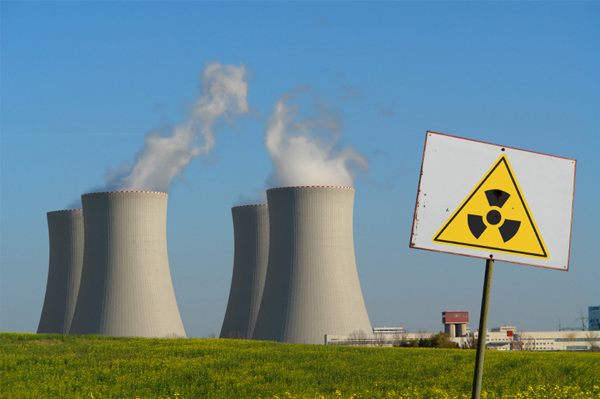
 Two and a half years after the Fukashima tragedy Japan does not want
to admit how serious it is, but it is obvious the drastic environmental
implications are to follow, Harvey Wasserman, journalist and advocate
for renewable energy, told RT.
Two and a half years after the Fukashima tragedy Japan does not want
to admit how serious it is, but it is obvious the drastic environmental
implications are to follow, Harvey Wasserman, journalist and advocate
for renewable energy, told RT.


